
Where we work
Built in Zambia. Working across the region.
Scroll to follow our operations from the continent down to each site.
Lusaka, Zambia
Africa Engineering designs and builds gravity jig washplants in Zambia, and partners with licensed small-scale miners to run them. Water and gravity do the work. No mercury, no chemicals.
Artisanal and small-scale gold mining is the largest source of man-made mercury pollution in the world. Mercury is mixed into the ore to catch the gold, then burned off, exposing miners, their families and the rivers downstream. Zambia is a party to the Minamata Convention on Mercury, which commits it to cutting that use.
The second problem is equipment. Many Zambian licence holders have the ground and the permits but no practical way to process the ore. Most plants on the market are imported, with parts and service a long way off.
| Aspect | The usual way | AE jig plant |
|---|---|---|
| Gold capture | Mercury amalgamation | Gravity and water |
| Chemicals | Mercury | None |
| Equipment | Mostly imported | Built in Zambia |
| Parts and service | Overseas suppliers | Local workshop and crew |
| Who runs it | The miner, alone | A joint venture with AE |
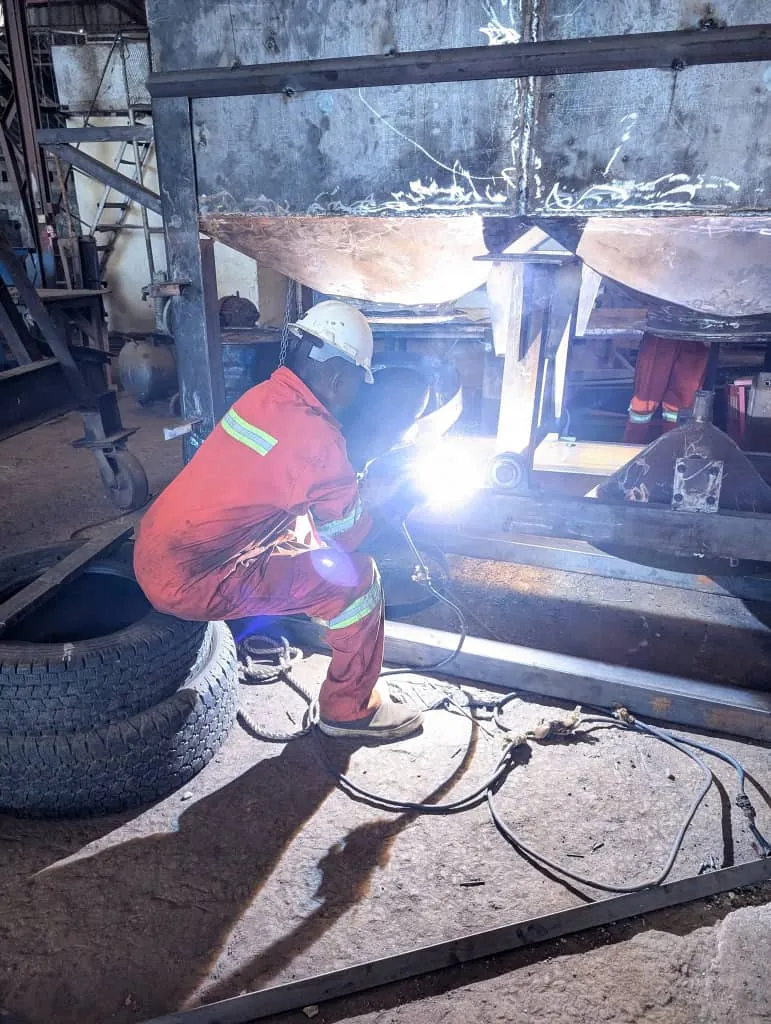
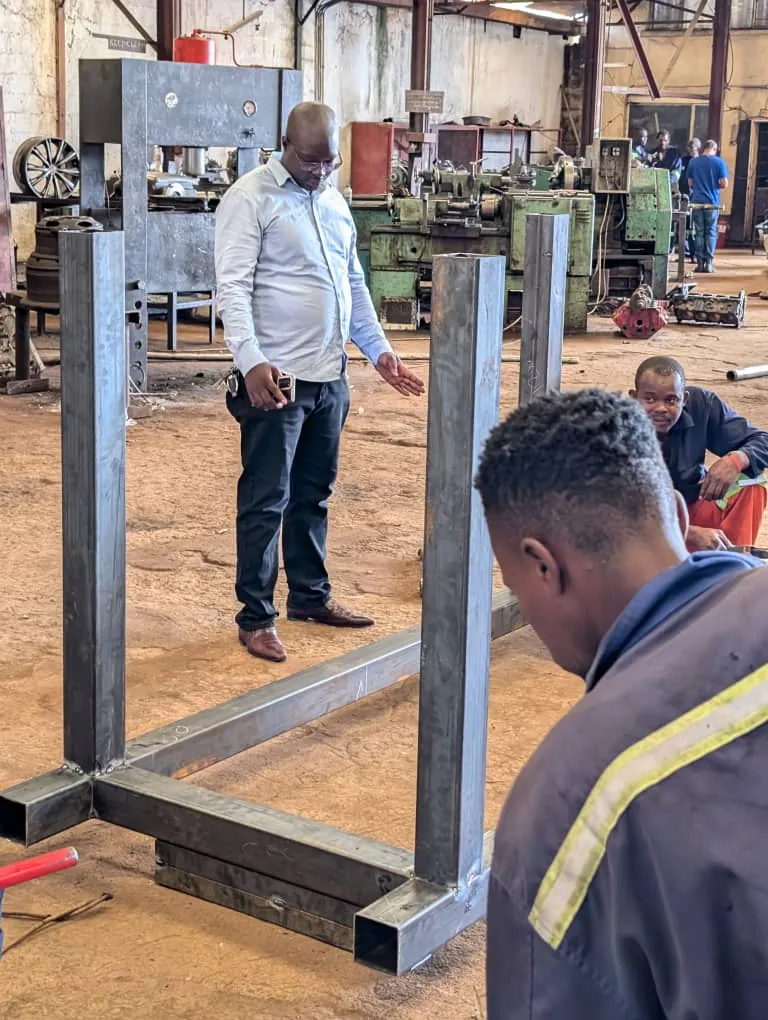
Every plant starts as raw steel in a Zambian workshop. A local crew welds and assembles it, and we truck it to site. Building here keeps costs down, keeps spare parts close and keeps the skills in the country.
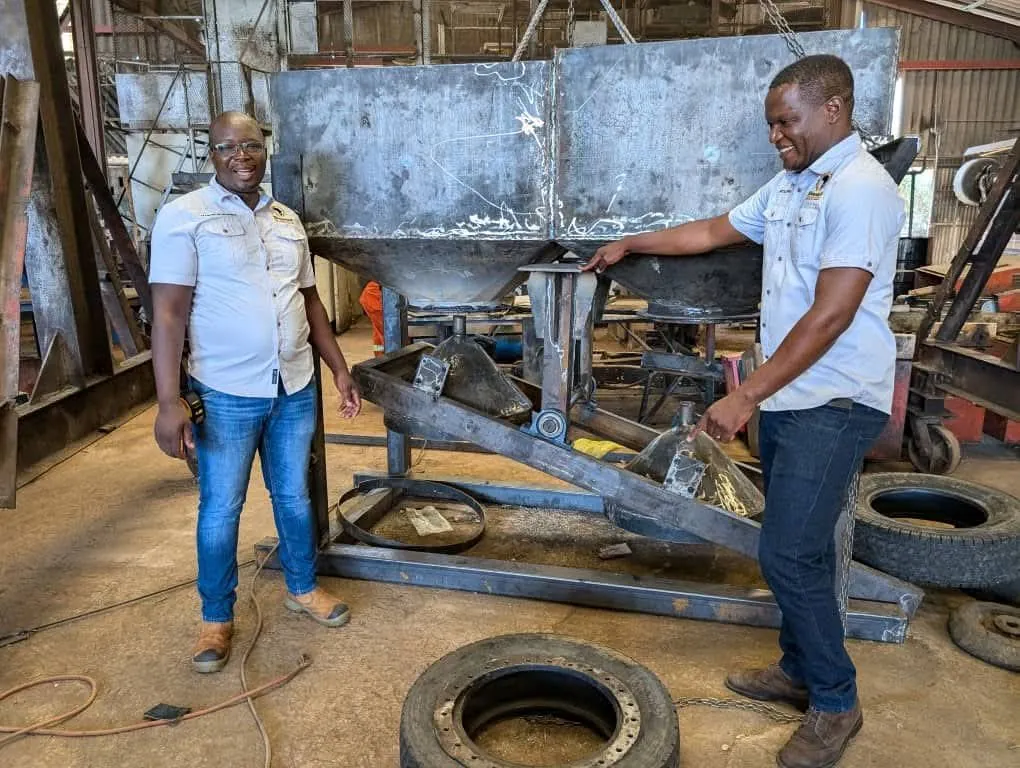
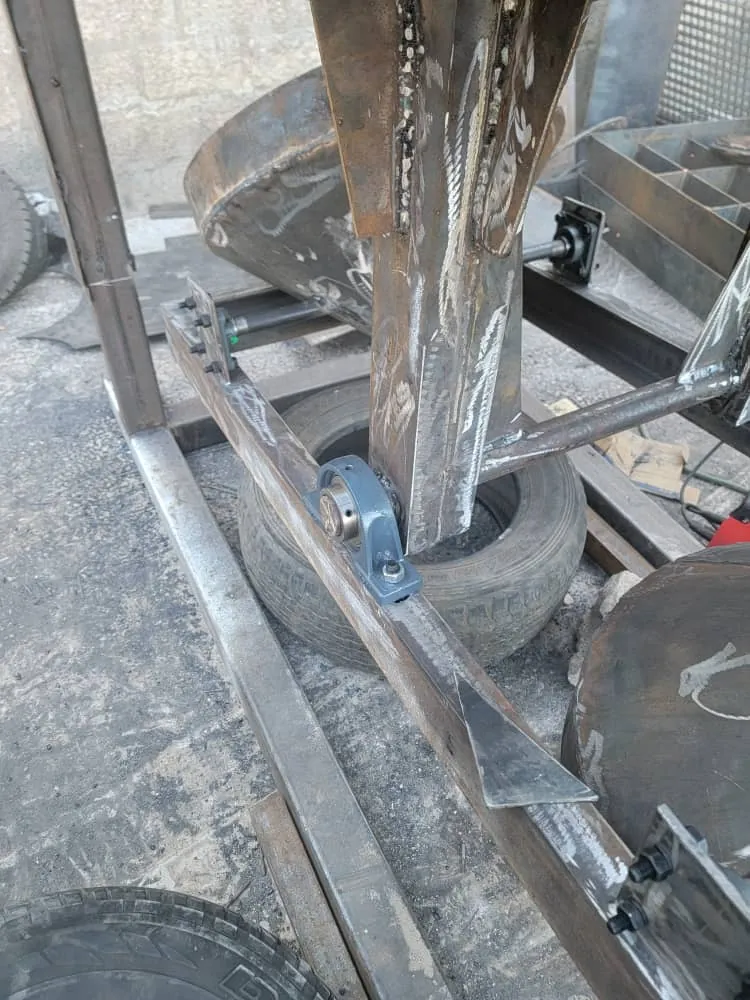
The frame and drive mounts take shape from raw steel.
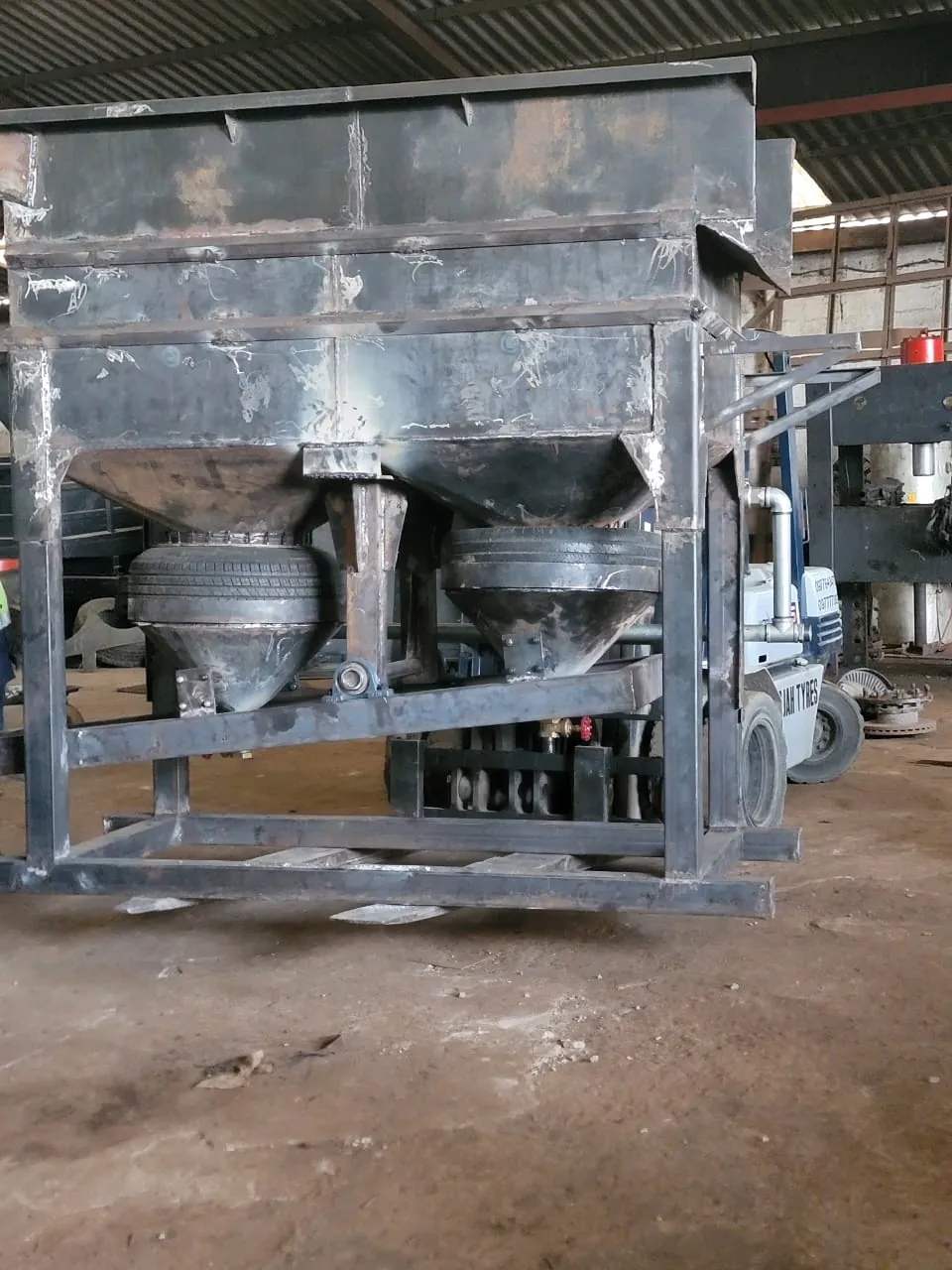
Hoppers, jig cones and frame are welded up.
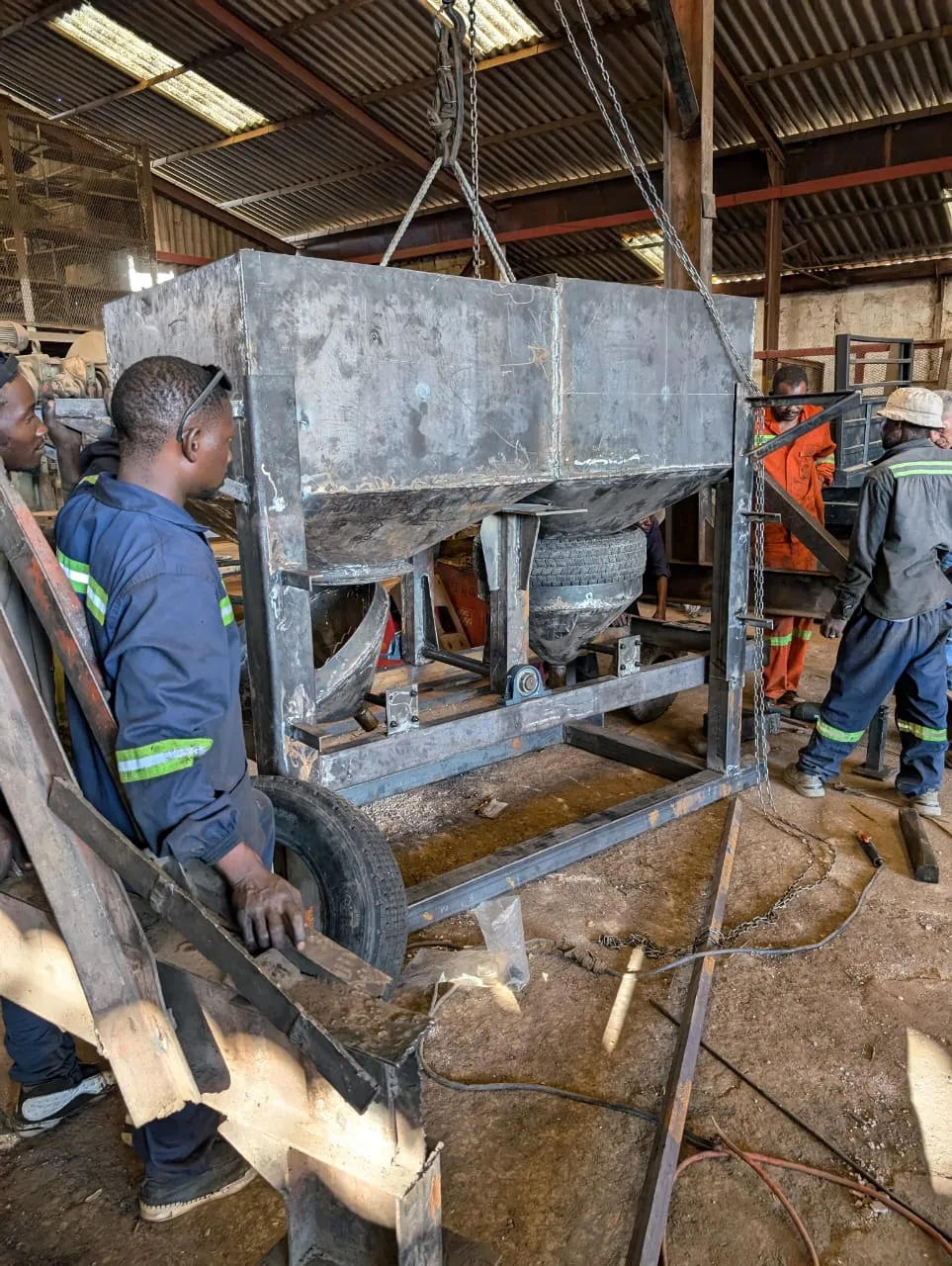
The crew lifts and fits the plant on the workshop hoist.
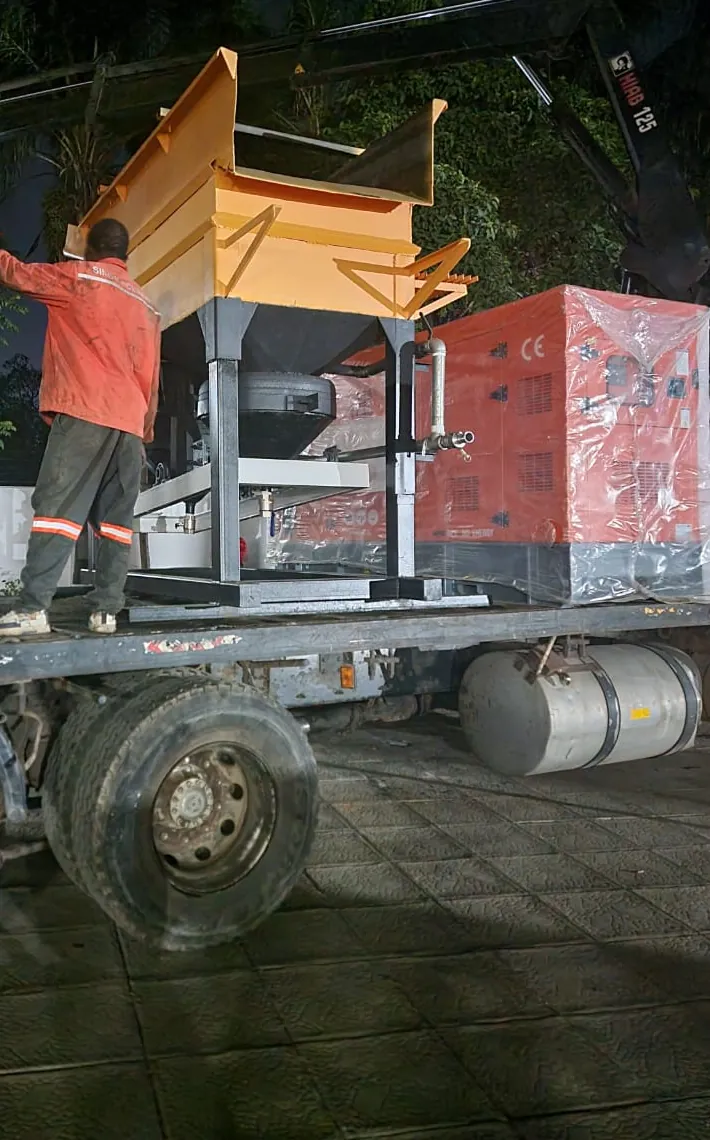
Painted, loaded with its generator and sent north.
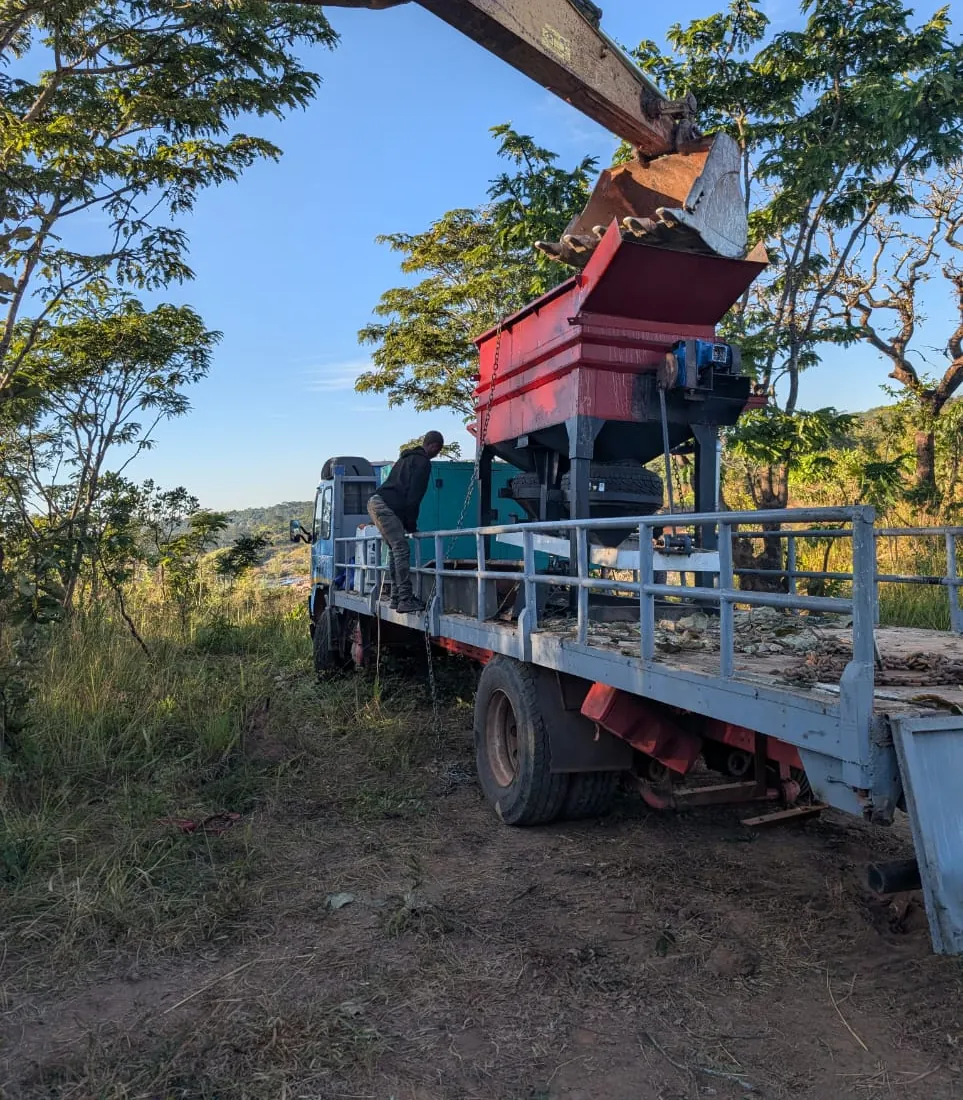
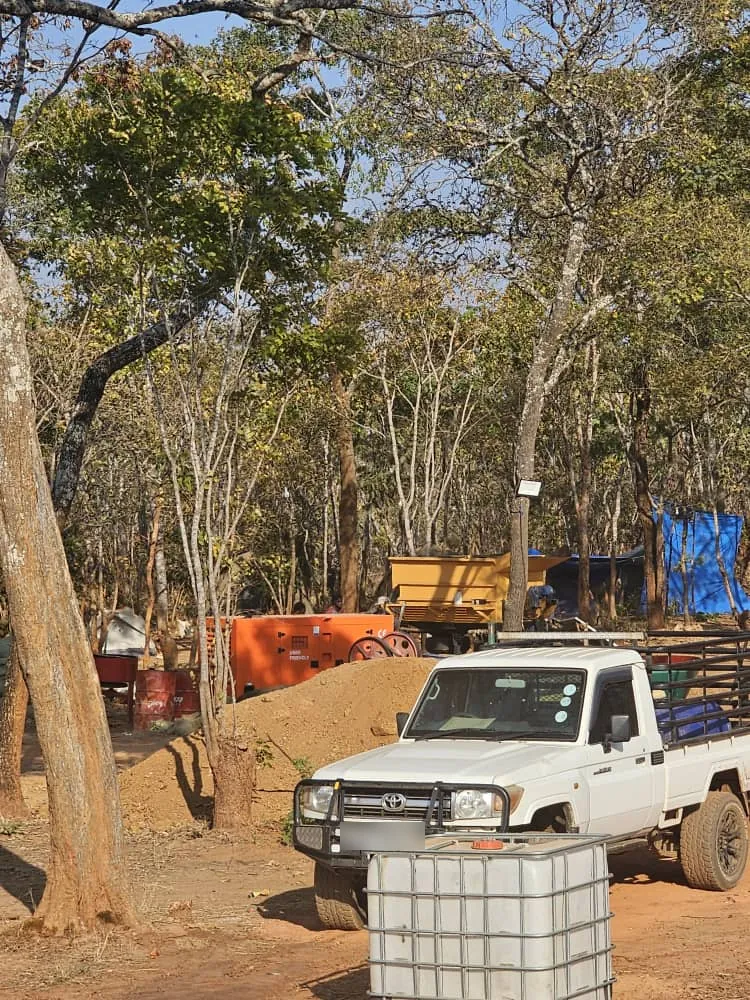
Offloaded on site at Senga Hill, Northern Province.
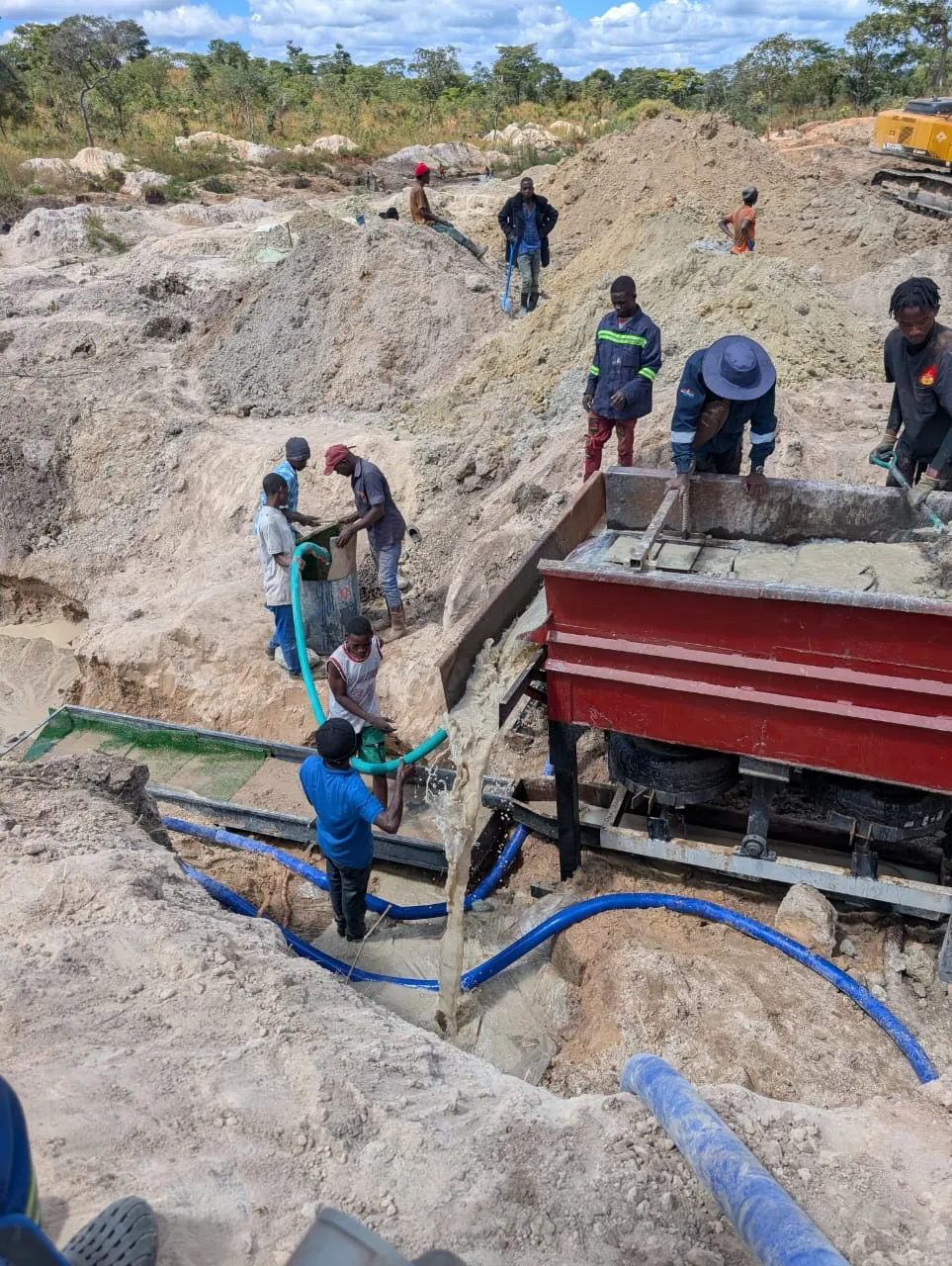
Ore and water go in. The gold concentrate stays behind.
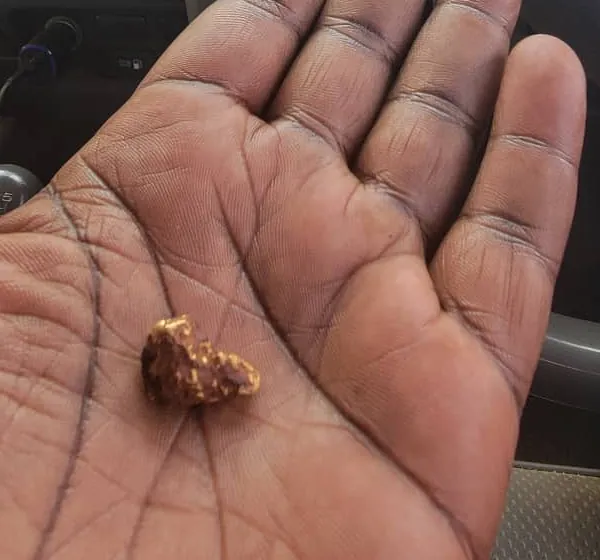
A nugget recovered by our plant in its first test run.
Gold is about 19 times heavier than water, and around seven times heavier than the quartz and sand it sits in. A jig uses that difference. It pulses water up through a bed of ore, again and again. Each pulse lifts the light material and lets the heavy particles sink. The gold settles to the bottom and is drawn off, and the waste washes over the top.
Ore and water go into the hopper and spread over a screen bed.
A motor-driven rubber diaphragm pushes water up and down through the bed, many times a minute.
Each pulse loosens the bed. Heavy particles, gold first, sink through the screen into the hutch. Light sand and gravel stay on top.
The gold concentrate drains from the bottom of the hutch. The waste flows over the end as tailings.
How many times heavier than the same volume of water.
1Hoppers and screen beds
2Rubber diaphragms under the hutches
3Eccentric drive
We work with licensed small-scale miners through joint ventures. You bring the ground. We bring the equipment, the crew and the know-how, and we share in what the plant recovers.
You hold a valid mining licence and access to the ground. We assess the site and the ore with you.
We build the plant, truck it to site, install it and run it with a trained crew.
Production is shared under a joint venture agreement, with clear terms and full paperwork in Zambia.
Where we work
Scroll to follow our operations from the continent down to each site.
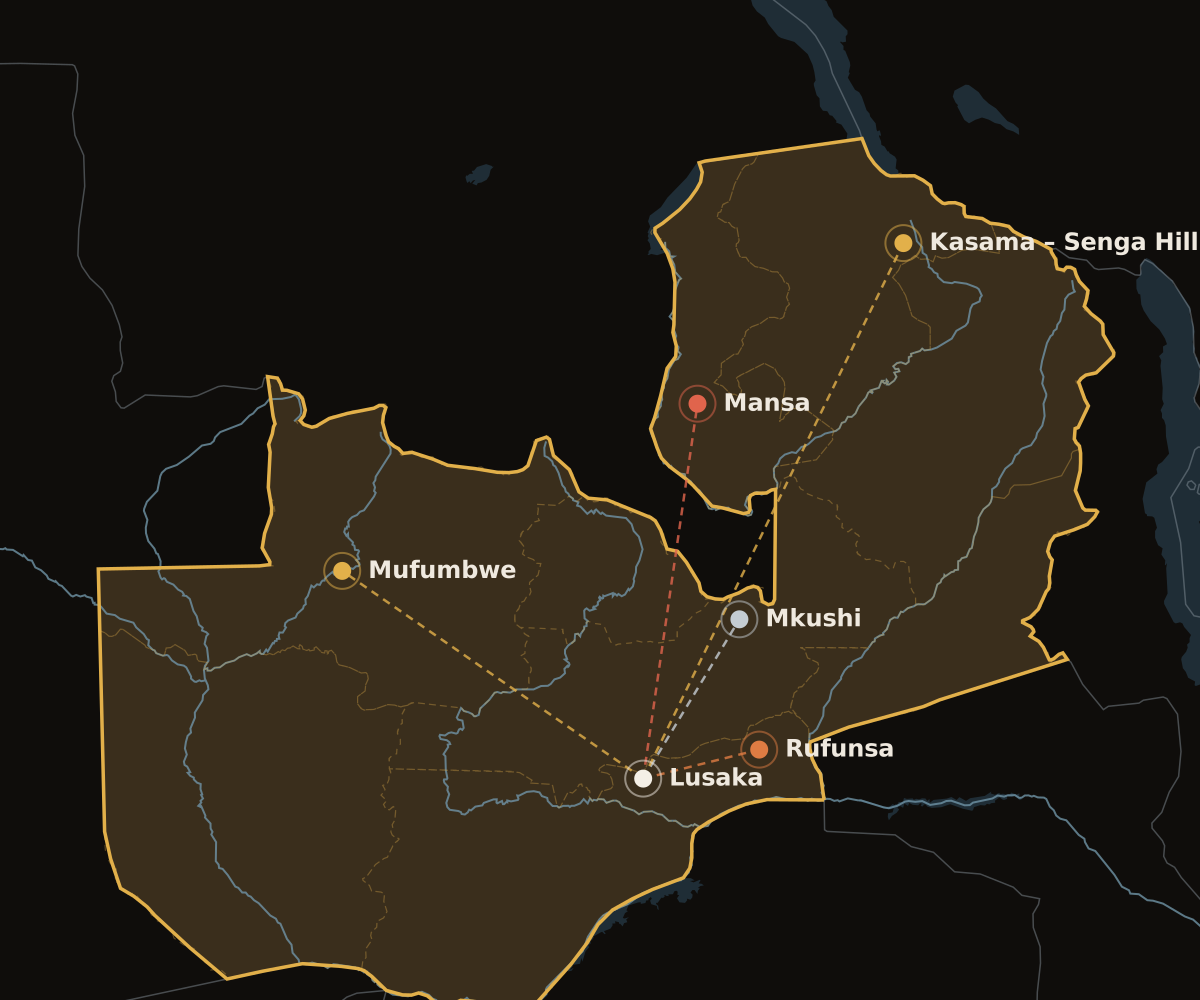
Zambia shares borders with eight countries and sits on one of the richest mineral belts on the continent. Every one of our sites is within road reach of our base in Lusaka.
Ten provinces, with deposits of copper, gold, manganese and gemstones. Our work runs north from Lusaka into Luapula and Northern Province, and west into North-Western Province.
Head office
Our head office in Kabulonga, Lusaka. From here we run engineering, logistics and partnerships for every site.
Copper · In development
Copper sourcing and processing close to the resource, east of Lusaka.
Mining interest
Exploration and partnership work in the Mkushi district.
Manganese · In development
Bringing local manganese suppliers into one streamlined process, with a central drop-off, crushing and screening site.
Gold · Active site
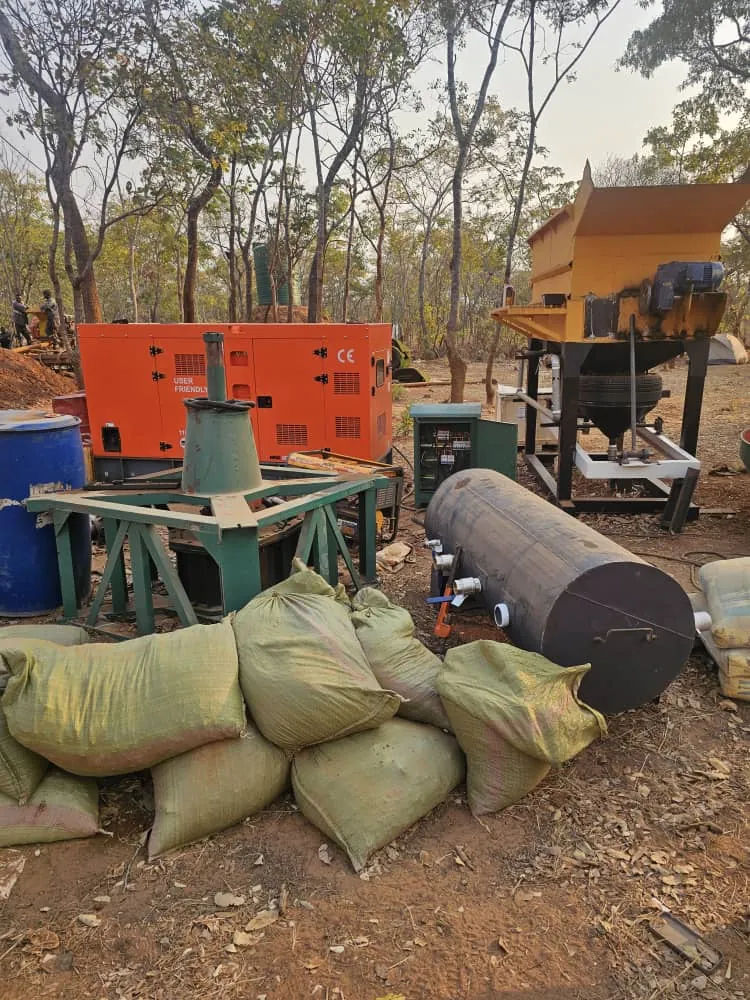
An AE jig washplant installed and processing on site. Gravity only, no mercury.
Gold · Active site
Mobilised in Mufumbwe, at the centre of North-Western Province's gold rush.
Have a licence in one of these regions, or nearby?
Partner with usWe don't simply facilitate opportunities. We structure, secure and operationalise them into sustainable ventures for our partners.
We turn opportunities into working, sustainable projects for our partners.
We formalise local relationships and create a regulated operating environment. That gives a sustainable model with suppliers and lowers the risk of operating and trading in foreign territories.
We design a logistics and security roadmap for each project, so partners get a turnkey solution.
Our socio-economic expertise and platform let project partners reinvest in a structured, well-formalised way, so value stays in the communities where we work.
Processing with our own jig plants, in partnership with licensed miners.
Active
Sourcing and processing near the resource at Rufunsa.
In development
Supply and processing for local suppliers around Mansa.
In development
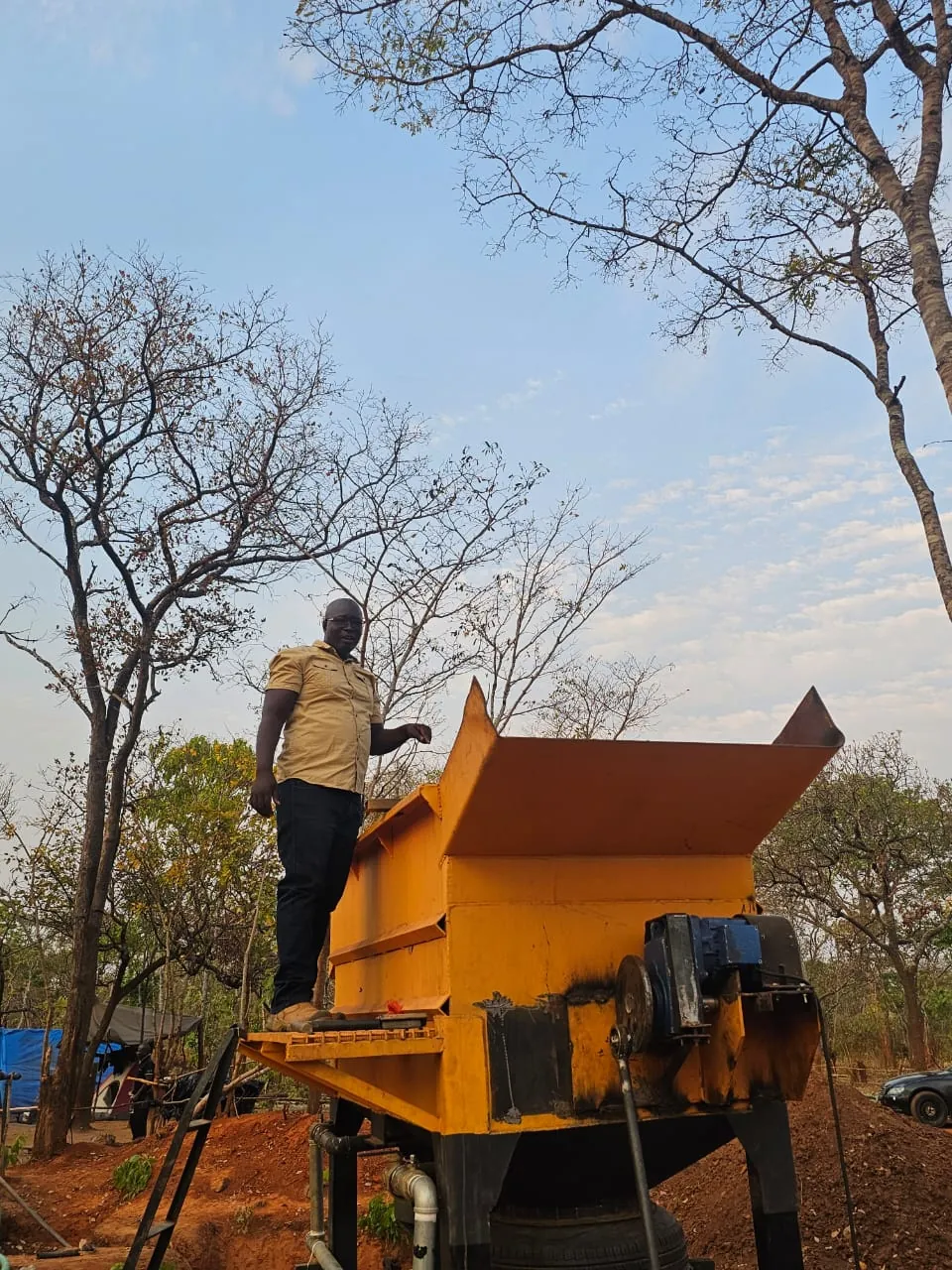
Founder · Qualified mining engineer
Most mine owners in Zambia had the licences but not the technology to extract the minerals. I wanted to give small-scale miners a way to mine without damaging the environment.
Martin is a mining engineer with more than 15 years in the industry. He has worked on operations in Zambia, the Democratic Republic of Congo and Kazakhstan, mainly in copper, gold and gemstones.
Across that career he kept seeing the same gap at home. Many Zambian mine owners held valid licences but had no practical way to extract what was in the ground. The equipment within reach was mostly imported, and gold recovery usually depended on mercury.
So he designed the Africa Engineering jig washplant, which recovers gold by gravity alone, and founded the company in 2025 to build the plants in Zambia and run them with licence holders. Martin leads the engineering and runs the relationships on the ground, working directly with miners, licence holders and the communities around each site.
Director
Andries is a director of Africa Engineering alongside founder Martin Silwamba. He leads the commercial side, covering partnerships and trade, so that Martin's engineering reaches the partners and markets it deserves.
He is also the founder of New Era Ventures, a South African agricultural commodity trading business that supplies fertiliser in volume to neighbouring countries. He holds a BCom with a focus on project management.
Advisor · Strategic partnerships
Natie brings more than 30 years of experience in cross-border transactions and the mining sector. He is an entrepreneur with a particular talent for identifying trading partnerships and developing new business opportunities, and he works closely with strategic partners to shape an offering for each.
In 2016 he established the FBT Foundation, a non-profit organisation that supports upliftment, education and community development programmes.
Whether you hold a licence, want a plant, or are looking at copper or manganese in Zambia, tell us what you have and we will come back to you.